Leather Care · 9 min read
How to Care for Leather: A Practical Maintenance Schedule
Most leather does not fail from use. It fails from being conditioned with the wrong product, or never at all.
What conditioning actually does
Leather is a fibre matrix held supple by fats and oils introduced during tanning. Those oils migrate and evaporate over time. Conditioning replaces them so the fibres flex rather than crack.
Cracking is not a surface problem. By the time you can see a crack, the fibre bundles underneath have already broken.
A schedule that works
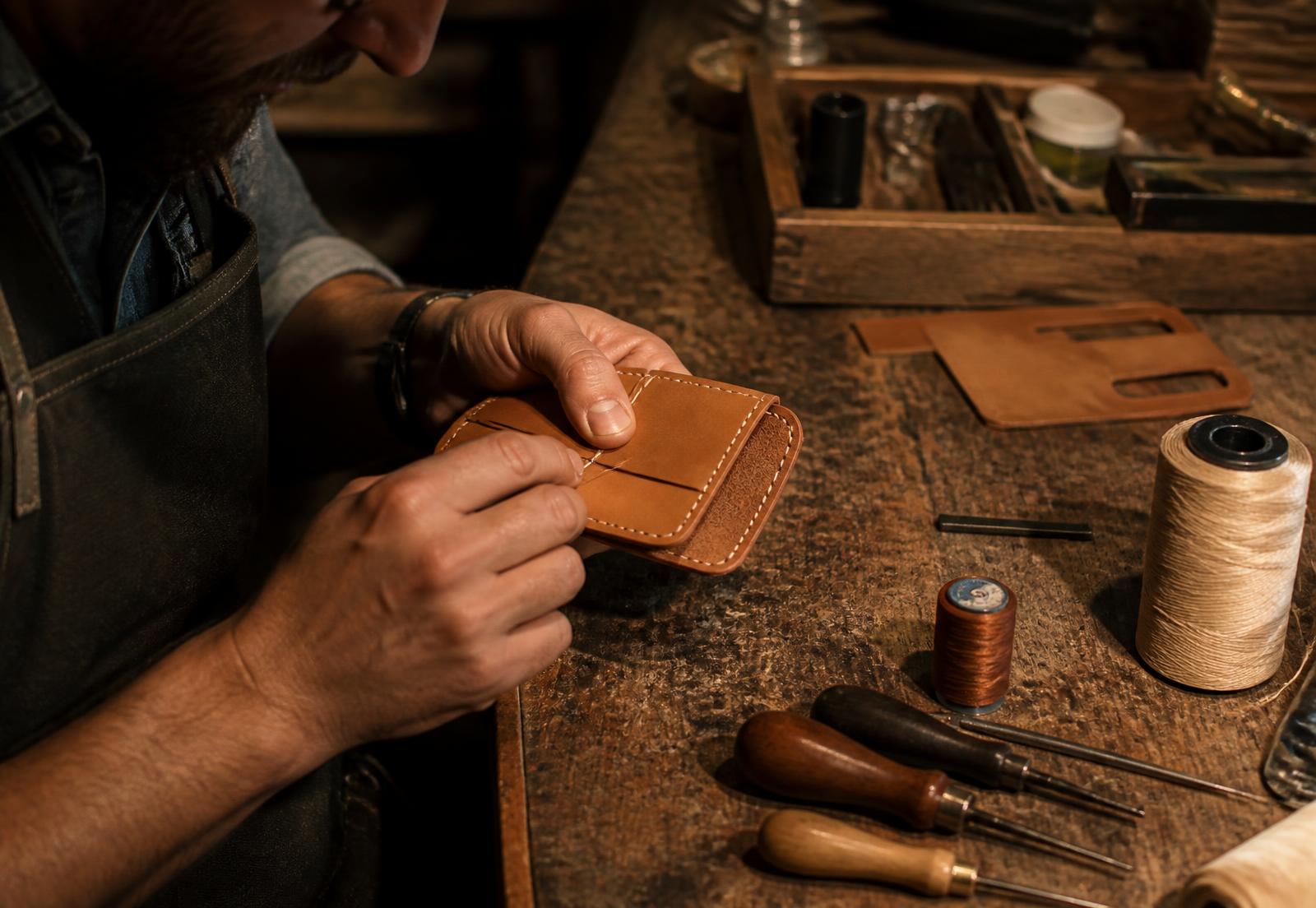
Wallets and card holders: condition once a year. Body heat and skin oils do most of the work for you.
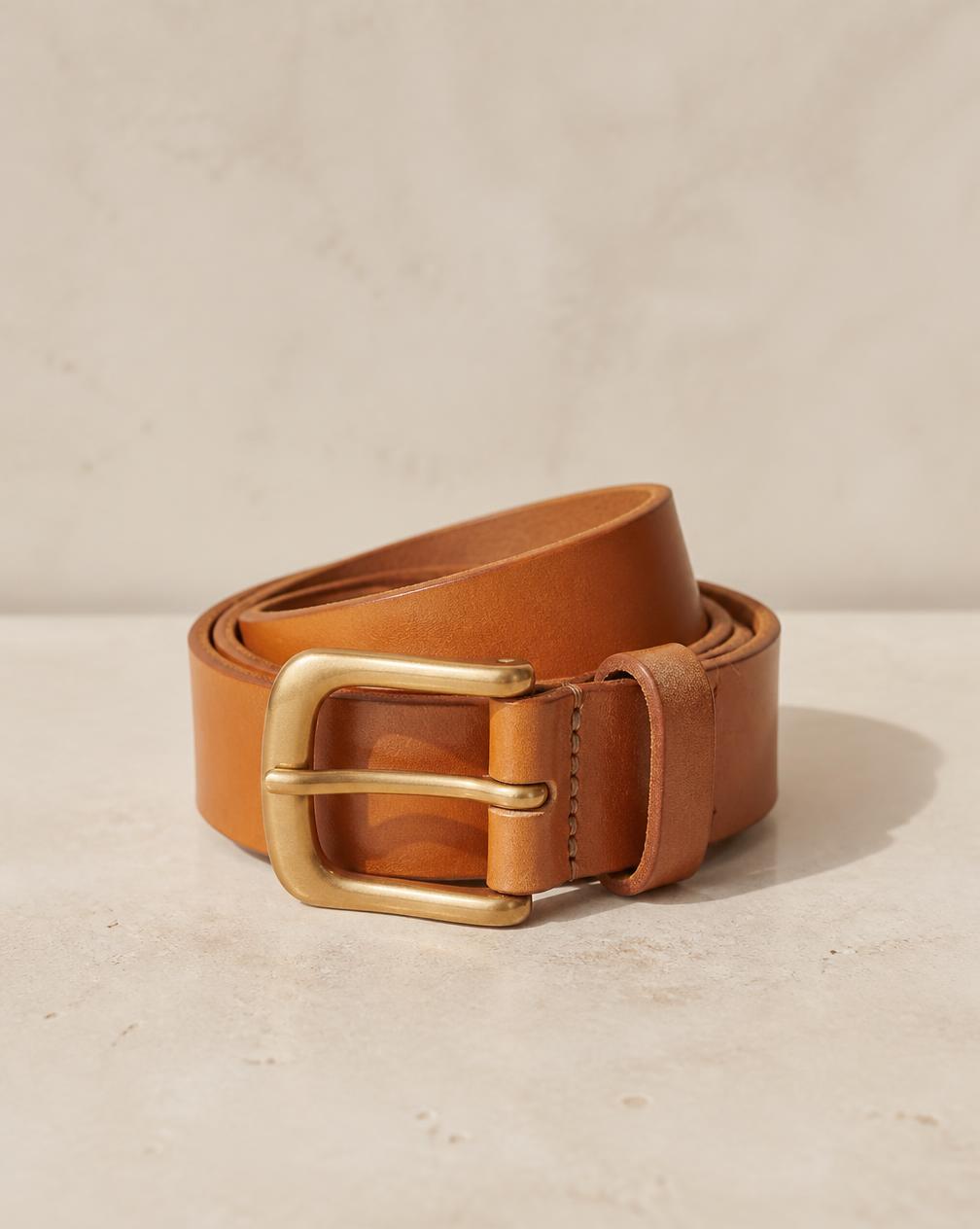
Belts: twice a year, focusing on the fold behind the buckle.
Bags: twice a year, more often at base corners and strap anchors.
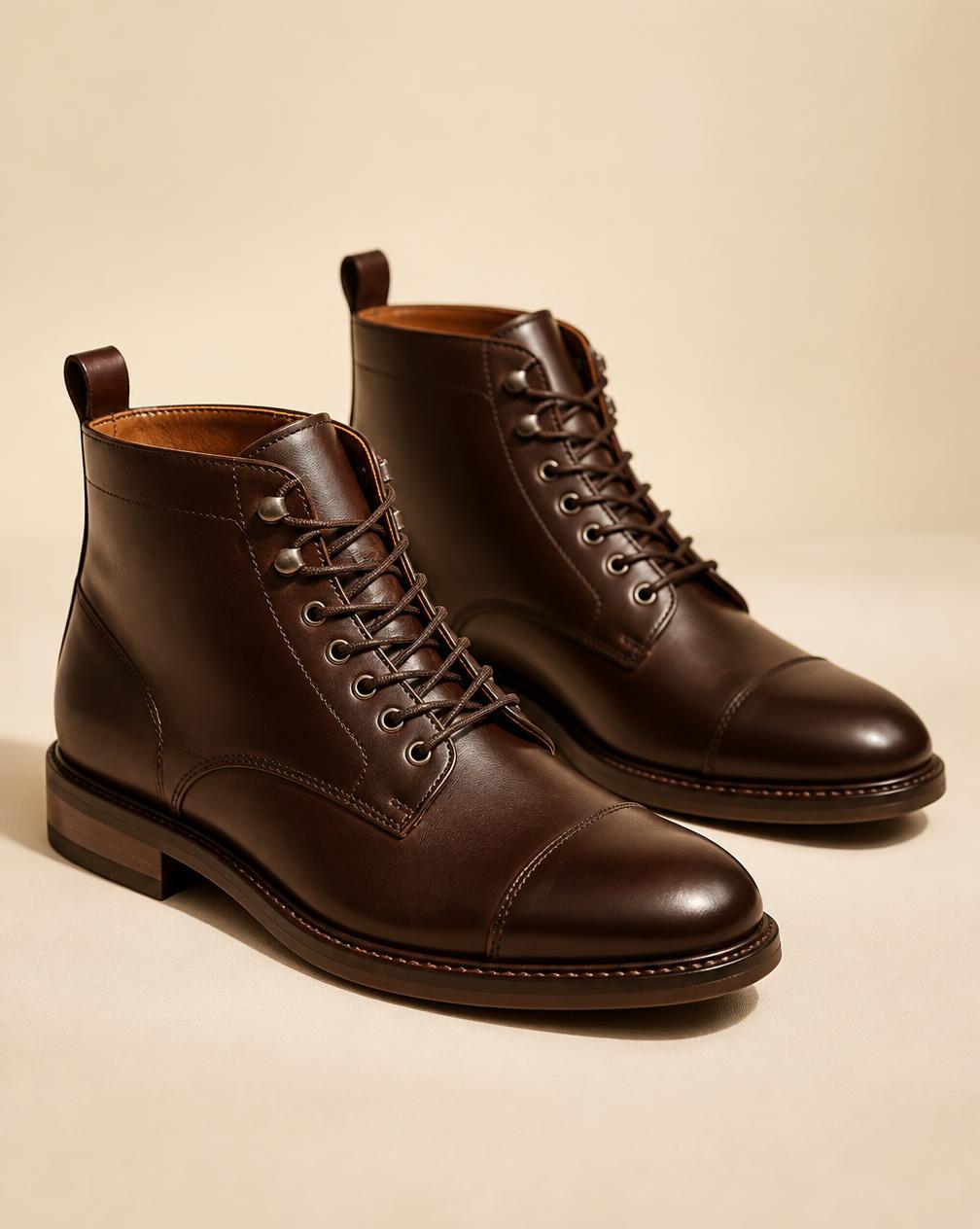
Shoes and boots: cream polish monthly, cedar trees after every single wear.
Choosing a product
Use a neutral cream conditioner for veg-tan and full grain. Use a wax for crazy horse and other hot-stuffed leathers. Use a light oil only for oiled pull-up leathers.
Avoid mink oil on vegetable-tanned leather — it over-softens and darkens unevenly. Avoid saddle soap on waxed leathers; it strips the wax content you paid for.
Water, heat and sun
If leather gets soaked, blot it and let it dry at room temperature away from any heat source. Heat drives out the remaining oils and the piece will stiffen permanently.
Sunlight darkens vegetable-tanned leather quickly and unevenly. Rotate the piece if you want a consistent tone.