
Buying Guides · 6 min read
How to Choose a Leather Wallet That Lasts a Decade
Stitch method, leather thickness and edge finishing predict wallet lifespan far better than price does.
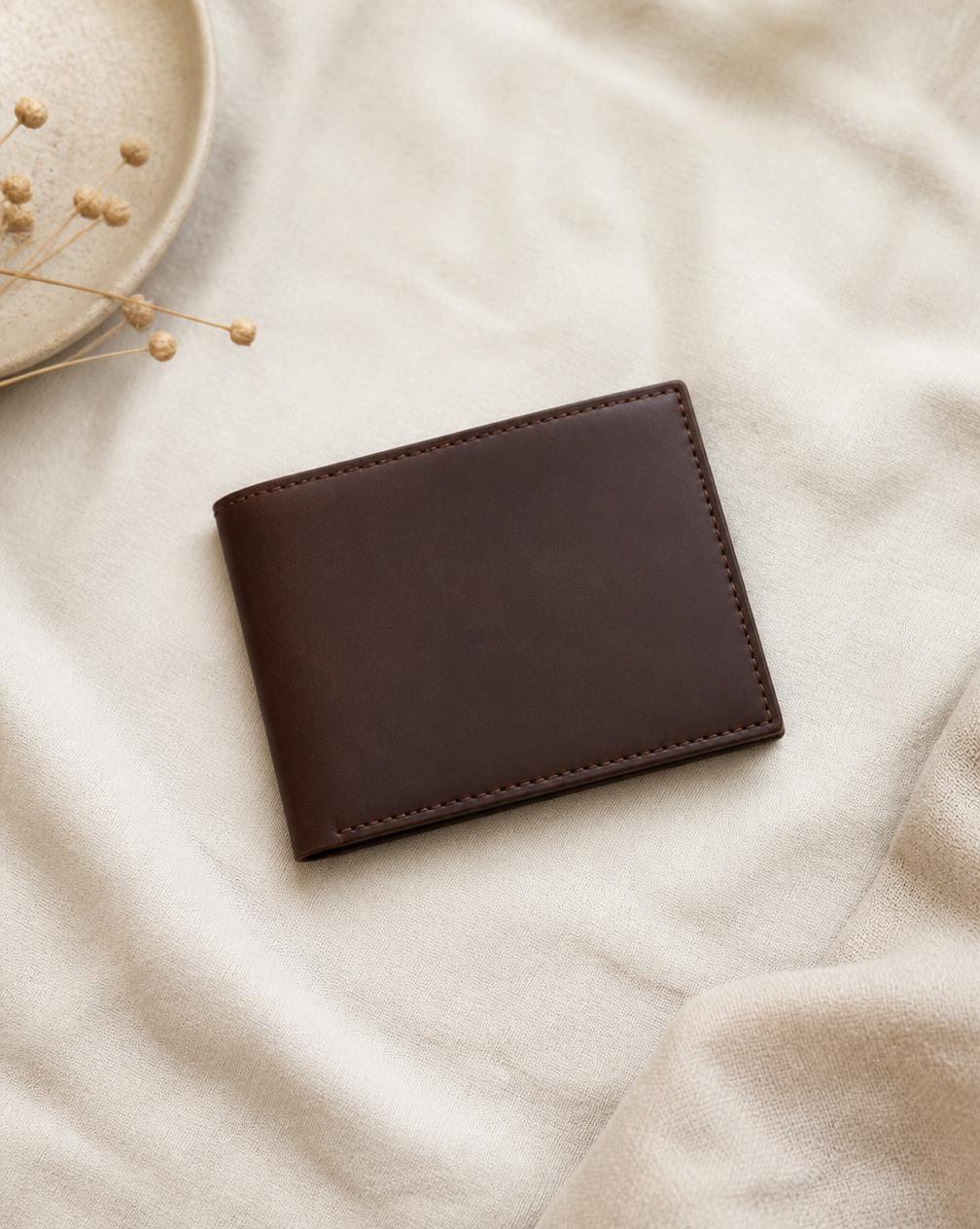
Check the stitching first
Machine lock-stitch uses two threads locked together. Cut one and the seam can unzip. Hand saddle stitch uses two needles passing through the same hole in opposite directions — cut one loop and the rest hold.
Wallets fail at the seams long before the leather gives out, so this is the single highest-value detail on the spec sheet.
Thickness determines bulk, not quality
A slim wallet needs leather split to around 0.9 to 1.2 mm. Thicker is not better here — a 2 mm wallet is simply a thick wallet.
What matters is that the leather is full grain before it is split, so the tight surface fibres are still present.
Painted edges versus burnished edges
Edge paint looks flawless in photographs and chips within two years of pocket friction. Burnished edges — sanded, wetted and compressed — cannot chip because there is nothing applied.
If a brand paints its edges, it is usually because burnishing would expose a bonded core.
Match the format to what you actually carry
Four cards and folded notes: a vertical card holder. Six to ten cards with cash: a slim bifold. Two passports and multiple currencies: a long travel wallet.
Buying a format larger than your carry guarantees the wallet stays half empty and loses its shape.