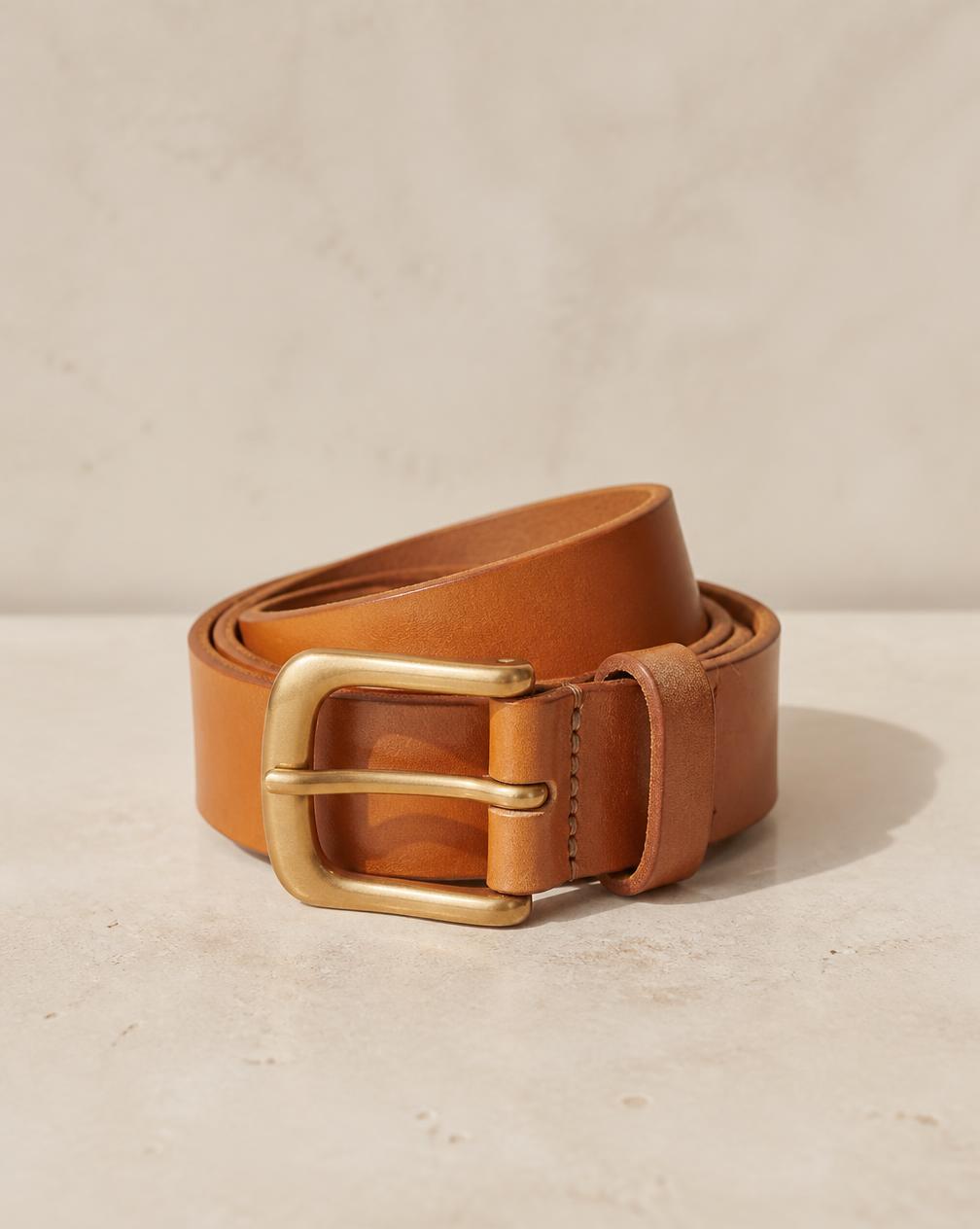
checklist · Knowledge Center
How to Judge Leather Quality: A 10-Point Inspection
A repeatable checklist for assessing any leather item in under two minutes — edges, stitching, grain, smell, thickness and hardware.
Quality in leather goods is visible if you know where to look. Run this list in a shop, or ask an online seller for the same evidence.
1. Read the cut edge
A solid hide edge shows a fibrous, layered cross-section; a coated split shows a flat plastic line.
2. Check grain irregularity
Natural pore variation beats a perfect repeating pattern.
3. Count stitches per inch
7–9 SPI on straps and 8–10 on wallets, even and centred, with no skipped holes.
4. Test the edge finish
Burnished or painted edges should be smooth and sealed, not raw and fuzzy.
5. Smell it
Sweet and woody means veg-tan; strong chemical or plastic smell suggests heavy coating.
6. Weigh the hardware
Solid brass or stainless has heft; plated zinc feels light and chips.
7. Check thickness
Compare against the published spec and the intended use.
8. Flex a corner
Good leather creases and recovers; coated splits crack whiten and stay creased.
9. Inspect the lining
Leather or heavy cotton twill, cleanly turned; thin polyester is a cost signal.
10. Ask for provenance
Named tannery and country of manufacture; vagueness is an answer in itself.
Definitions
- SPI
- Stitches per inch — a density measure for hand and machine stitching.
Supporting attributes
- Inspection time
- ≈2 minutes
- Points checked
- 10
Entity relationships
- Leather Durability
- Leather Stitching
- Edge Finishing
- Hardware Installation
Frequently asked questions
Buying advice
Apply the list before price. A £60 belt that passes eight points beats a £200 belt that passes four.
Summary
Quality is not a feeling — it is ten observations you can make yourself.
Visual references
- Annotated inspection photograph with ten callouts